There's a point with every old fence where you stop fixing it and start living with it. A few boards are missing. Two posts lean and you've propped one with a 2x4. The gate needs a lift and a shove. You replace a section after a storm, and the next one over goes the following year.
That's usually when people start asking about replacement. This page covers how to tell when you're there, what the tear-out involves, and what to decide before the new fence goes up.
When repair stops making sense
Most fence problems can be repaired, and the fence repair page covers the common ones. But repairs only pay off when the rest of the fence is sound. Some signs it isn't:
- Rot at the ground line on post after post. Push on a few. If many move, the whole line was set the same way and is failing the same way.
- The fence leans as a whole. Not one post, but a long stretch tipping in the same direction.
- Boards are soft, split and gray all over. New boards nailed to tired rails won't hold long.
- You're paying for repairs every year. Add up the last few. If you're heading toward the cost of a new run, the math has changed.
- The fence doesn't do its job anymore. Too short for the new dog, wrong style for the HOA, or built for a house that had different needs.
A rough rule: if more than about a third of the posts are rotted or loose, replacement is usually the better spend. A good contractor will look and give you an honest call either way.
What tear-out involves
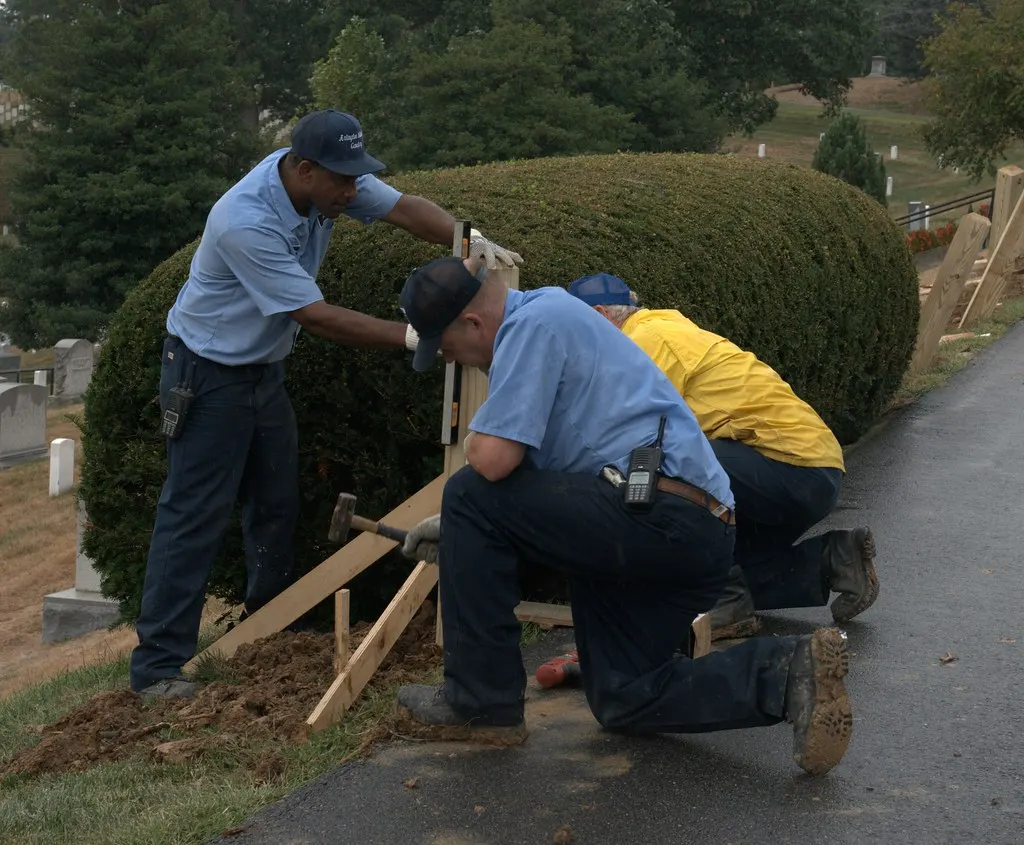
Taking out an old fence is more work than it looks. In Kannapolis, a lot of older fences were set with concrete around each post, and pulling a post with a chunk of concrete on the bottom out of red clay takes time and the right tools.
The usual steps:
- Panels, boards or mesh come off first.
- Posts get pulled, concrete and all, or cut and dug out depending on the situation.
- Holes are filled or reused.
- Everything gets hauled away, unless the quote says otherwise.
Make sure the written quote lists removal and haul-away as its own line. If it doesn't say it's included, ask. Leftover old fence piled by the curb is not a good end to a project.
On tight lots in the older mill-village parts of town, access can be the slow part. If everything has to be carried by hand down a narrow side yard, that adds labor.
Reusing old posts: usually no
People often ask whether the old posts can stay to save money. Sometimes, but not often.
- Wood posts that have been in the ground for years are usually soft at the base even if the tops look fine. Hanging a new fence on them means it will fail on the old fence's schedule.
- Steel posts from chain link can sometimes be reused if they're straight, set well and not rusted through. The contractor can check them.
- Spacing and height may not match the new fence. A new vinyl or aluminum fence has panels of a set width, so old post locations rarely line up.
New posts in new holes, set deep in concrete for clay soil, is the normal answer. It's the part of the fence that decides how long the rest of it lasts.
Replacing it with something better
A replacement is the easiest time to change material, height or layout, since the old fence is coming out anyway.
- Wood to wood. A new wood privacy fence with better posts, better fasteners and a stain schedule will outlast the one it replaces.
- Wood to vinyl. If you're done staining, vinyl fence costs more up front and skips the upkeep.
- Mixing materials. Privacy where the neighbors are close, chain link along the back where nobody looks.
- Taller or tighter. If the old fence was built before the dog, now's the time to go taller or add a dig barrier.
- Better gates. Wider for the mower, heavier posts, hardware that latches on its own.
Material, height, footage, gates and removal all go into the price. The fence cost guide explains how each one moves the number.
Check the line and the paperwork first
Here's the part people skip. The old fence may not be on the property line. It may have been built by a previous owner, set a foot inside or a foot over, and nobody checked. Replacing it in the same holes repeats the mistake.
Before the new fence goes in:
- Find your survey or the plat for your lot. Look for corner pins.
- Talk to the neighbor, especially if the old fence was shared or they think it's theirs.
- Check HOA covenants. Many HOAs require approval for a replacement, even one that looks the same. Get it in writing. The contractor can help with the drawing and quote the HOA asks for.
- Check permit rules for your address. Kannapolis homes are in Cabarrus or Rowan County, and the contractor can help confirm what's needed and pull any permit.
- NC811 marks buried utilities before any new holes are dug.
This site covers fence replacement in Kannapolis and nearby towns like Concord, Landis and China Grove.
Questions people ask
Should I repair or replace my fence?
If the problems are limited to a few posts, a gate or some boards, repair usually makes sense. If many posts are rotted or the whole line leans, replacement is usually the better use of money. A contractor can look at it and tell you which way they'd go and why.
Can the new fence go in the same spot as the old one?
It can if the old fence sits where it should. Check your survey or corner pins before you assume it does. Old fences are often off the true line by a few inches or more.
Is removing the old fence included?
Only if the written quote says so. Removal and haul-away should be listed as their own item. If they're not on the quote, ask before you sign.
Do I need HOA approval to replace a fence?
Many HOAs require it, even for a fence that looks like the old one. Check your covenants and get written approval before work is scheduled.