If you picture a backyard fence, you're probably picturing this one. Six feet of wood boards, no gaps, and a gate by the driveway. It's the most common backyard fence in Kannapolis, and for good reason.
Why people choose a wood privacy fence
A wood privacy fence does a lot of jobs at once:
- Privacy. On the small mill-house lots in older Kannapolis, a 6 ft fence turns a yard you can see from three houses into one that's yours.
- Pets. No gaps for a small dog to squeeze through, and tall enough that most dogs won't try to clear it.
- Kids. A closed-in yard with a latched gate means less watching the street.
- Cost. Wood usually costs less than vinyl or aluminum for the same height.
- Looks. It can be stained, painted or left to weather, and it fits almost any house.
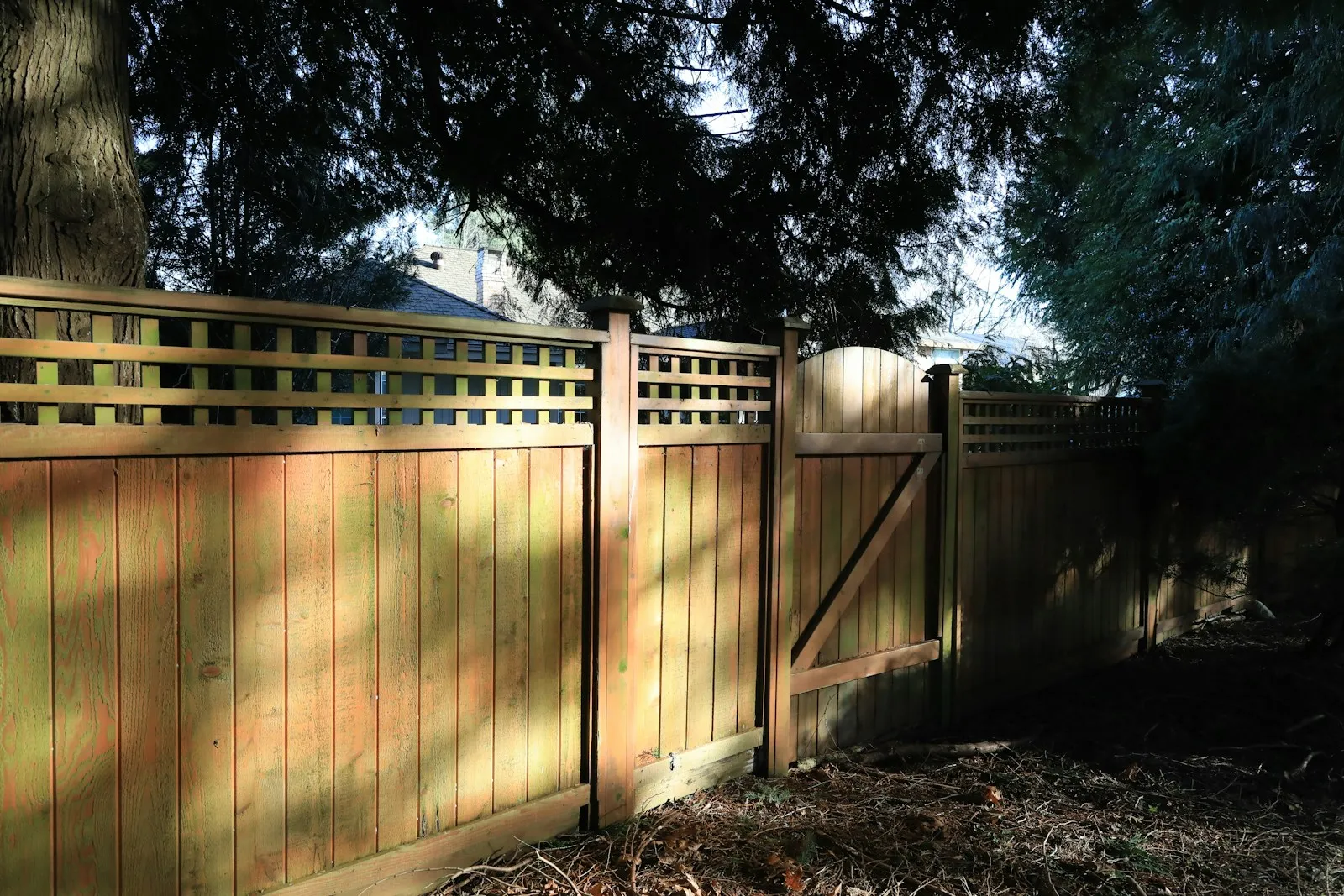
Wood privacy fence styles
There are a few common ways to build one, and each looks and wears a little differently.
Stockade or flat-top privacy
Boards butted side by side on two or three rails. Simple, solid and the most budget-friendly style.
Dog-ear privacy
The same idea, with the top corners of each board clipped. It's the classic suburban look you'll see in many newer subdivisions.
Shadowbox or board-on-board
Boards are staggered on both sides of the rails so the fence looks finished from either side. It lets a little air through, which helps on hot, still days. It uses more lumber, so it costs more.
Capped or trimmed tops
A top cap and trim board give the fence a cleaner, more custom look and help shed water off the board ends.
Built for Kannapolis clay and weather
Wood fences fail in predictable ways here. The posts lean, the boards warp, and the bottom rots. Most of that comes down to how it was built.
- Posts set in concrete. Red clay holds water and shifts as it wets and dries. Posts go deep and get set in concrete so they stay plumb.
- Ground-contact rated posts. Posts sit in the dirt and need lumber treated for ground contact.
- Boards held off the ground. A small gap at the bottom keeps boards from wicking up water and rotting early.
- Good fasteners. Coated or stainless fasteners hold up better against treated lumber and humidity than cheap nails.
- Planned for slopes. On sloped yards the fence is stepped or follows the grade, so you don't end up with big gaps under the fence.
- Drainage in mind. After heavy rain, water moves across clay. A good builder looks at where it runs so the fence doesn't block it or wash out underneath.
What sets the price of a wood fence
A 6 ft wood privacy fence is usually the most affordable way to get real privacy. Footage, height and the number of gates drive most of the total. Board-on-board, caps, trim and difficult ground push it higher.
We don't publish prices because every yard is different. Your real price comes from a free on-site visit and a written quote. See the full fence cost guide for more.
Before the build
A few things happen before any post goes in:
- NC811 marks utilities. Every job, every time.
- HOA approval, if you have one. Many HOAs set rules on height, style, and which side of the fence faces out. Get approval in writing.
- Property line confirmed by you. Use your survey or corner pins. The crew builds to the line you give them, with no guessing.
- Gate locations decided. Think about the mower, the trash cans and whether you might ever need a wider double gate for a trailer.
Signs it's time to replace an old wood fence
- Several posts are leaning or wobble when you push them
- Boards are rotted at the bottom, especially along the ground line
- The gate won't latch no matter how often it's adjusted
- Whole sections bow or sway in the wind
If it's only a few boards or a post or two, fence repair may be all you need.
Other options to compare
Wood isn't the only choice. If you'd rather never stain or paint, look at a vinyl fence. If you mostly need to contain a dog on a budget, chain link or our dog and pet fencing page may be a better fit.
Call (980) 324-2157 for a free estimate on your wood privacy fence.
Questions people ask
How long does a wood privacy fence last in Kannapolis?
A well-built pressure-treated fence commonly lasts many years, but it depends on lumber quality, how the posts were set and how well it's maintained. Posts in concrete, boards kept off the ground and a stain or sealer every few years all help a lot with our heat and humidity.
Should I stain my new wood fence right away?
New pressure-treated lumber is usually wet from the treatment, so most people let it dry out for a while before staining. A simple test is to sprinkle water on a board. If it beads up, wait. If it soaks in, it's ready.
Which side of the fence faces my neighbor?
Traditionally the finished side faces out, toward the neighbor or street, and the rails face your yard. Many HOAs require this. If you want both sides to look good, board-on-board is a nice option.
Can a wood fence go up on a sloped yard?
Yes. The fence can be stepped, where each section sits level and steps down the hill, or built to follow the slope. Which works better depends on how steep the yard is and how much gap you can accept at the bottom. The installer can walk it with you and show you both.